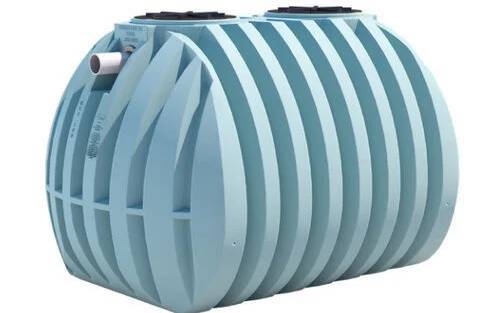
Choosing the Right Septic Tank
Single or double compartment. A single compartment tank holds all waste in one chamber and suits smaller households and lower daily flow. A double compartment tank adds a second chamber that gives solids more time to settle before liquid moves to the drainfield. Many jurisdictions specify compartment count for new residential systems, so check what your permit calls for. Browse single compartment tanks and double compartment tanks, or see the full single vs dual compartment comparison.
Standard duty or heavy duty. Standard duty tanks handle typical residential burial conditions. Heavy duty tanks use a thicker wall for deeper burial, heavier soil loads, and commercial sites. Use the Standard Duty and Heavy Duty filters above to compare both builds of the same tank.
Septic tank or holding tank. A septic tank discharges treated liquid to a drainfield. A holding tank does not discharge at all and must be pumped out, which makes it the right choice for sites without a drainfield. If your site has no drainfield, shop septic holding tanks instead.
Burial and installation. All tanks in this department are designed for underground installation. For burial depth ratings and lid riser options, see underground septic tanks. Covers, risers, and effluent filters are in septic tank accessories.
Septic Tank Questions
What size septic tank do I need? Tank size depends on bedroom count and estimated daily flow, and most states set a minimum size for new home systems. Our septic tank sizing guide walks through the sizing math and typical state minimums.
Are these tanks certified? IAPMO certified models are available across the range, and certification is noted on each product page. Certification and state approval are not the same thing, and your county may require a specific approval, so confirm the rating your permit calls for before ordering. See the approvals we hold by state.
Can a plastic septic tank be buried? Yes. These polyethylene tanks are engineered for direct burial, with heavy duty builds available for deeper installations and heavier soils. Follow the bedding and backfill instructions for your model to protect the warranty. If you are weighing materials, see concrete vs plastic septic tanks.
How do I get help choosing? Send us a quote request with your state, household size, and site conditions, and our team will confirm which approved tank fits your system.
Septic Tank Buying Guides
Working through a decision? These cover the questions that come up most often.
What size septic tank do I need?
Answer a few questions about the property and your state, and see the capacity your system calls for along with the tanks that match.
Types of Septic Tanks
Material, compartments, function and placement, plus how the common septic system types differ and which tank each one needs.
Single vs Dual Compartment
Chambers, burial depth, backfill, access and available sizes compared, and why local code usually decides this one.
Concrete vs Plastic Septic Tanks
Where each material has the advantage on weight, site access, water table and local approval, and what to do if you need concrete.
Septic Tanks Approved by State
The approvals we hold, listed by state with part numbers and capacity ranges. Always confirm with your local authority.
Septic Tank or Holding Tank?
A septic tank treats and discharges. A holding tank stores and gets pumped out. Which one your site needs, and how to size it.
Risers, Lids and Accessories
Bringing the lid up to grade, replacing a cracked cover, effluent filters and distribution boxes, and how to specify each one.