Septic Tank Lids and Covers
A septic tank lid seals the opening at the top of the tank. Depending on where you are and who installed your system, the same part gets called a septic tank cover, a septic tank cap, an access cover or an opening cover.
If your existing lid is cracked, warped or missing, replacing it is the most important safety job on a septic system. An open or failing tank opening is a fall hazard, and a damaged lid lets surface water and debris into the tank.
Choosing a Replacement Lid
- Measure the opening, not the tank. Match the diameter of the hole you are covering
- Pick the diameter. We stock 20 inch and 10 inch septic tank covers
- Choose the duty. The heavy duty 20 inch cover is built for maximum strength
Our covers and risers are made for AK Industries tanks and risers, so match the opening size and the tank model before you order. Where children or livestock have access to the area, add a safety lid or riser pan beneath the cover.
Septic Tank Risers
A septic tank riser extends the tank opening up to ground level so the lid sits at grade instead of buried under soil. That turns pumping and inspection into a two minute job rather than an excavation, and it is the single change that most reduces the cost of maintaining a system over its life.
Risers are sized by diameter to match the opening on your tank, in the same 20 inch and 10 inch sizes as the covers. They stack, so if a single riser does not bring you to grade, add another. A complete riser assembly is a riser sized to your opening, a cover in the same diameter to seal it, and a safety pan underneath where access is a concern.
Septic Tank Effluent Filters
An effluent filter sits in the outlet of the tank and catches solids before they reach the drain field. Drain field replacement is one of the most expensive repairs in a septic system, and a filter is the cheapest insurance against it.
Filters need cleaning periodically, usually when the tank is pumped. A riser makes that far easier, which is why filters and risers are often installed at the same time.
Septic Distribution Boxes
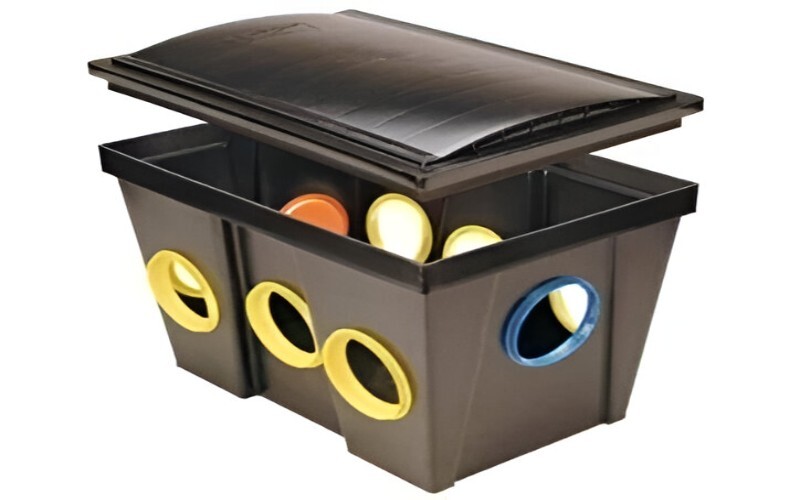
A distribution box, often called a D box, splits flow from the tank evenly across the lines of the drain field. If one line receives more than its share, that section of field saturates and fails early while the rest goes unused.
Distribution boxes are specified by the number of outlets they carry. We stock seven hole and nine hole boxes, so match the box to the number of drain field lines your system runs.
Septic Chamber Systems
Chamber systems form the drain field itself, creating void space for effluent to disperse into the surrounding soil. End caps close the run at each end. Chamber based fields are an alternative to traditional stone and pipe, and local approval requirements vary, so confirm what your permit calls for before ordering.
Choosing the Right Parts
Most septic accessory purchases come down to three measurements: the diameter of your tank opening, the depth from the top of the tank to ground level, and the number of lines in your drain field. With those three numbers you can specify a lid, a riser and a distribution box without guessing.
If you are not sure what you need, send us a quote request with your tank size, the depth of cover over the tank, and a photo of the existing opening, and we will tell you which parts fit.