








Single vs Dual Compartment Septic Tanks
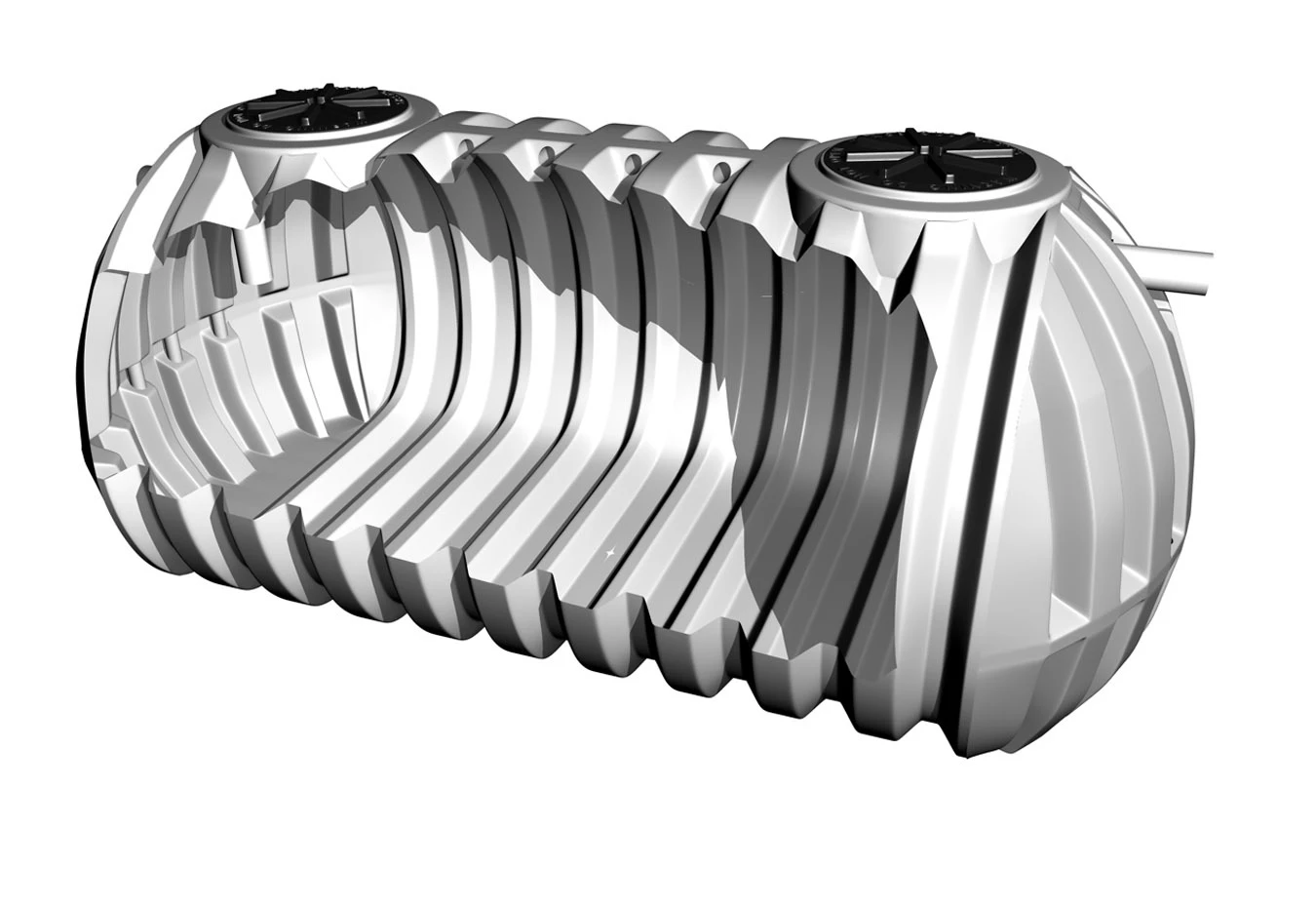
Single vs Dual Compartment Septic Tanks
A single compartment tank holds everything in one chamber. A dual compartment tank splits the same volume with an internal baffle, so solids settle in the first chamber and clearer liquid moves to the second before it leaves the tank.
That one difference drives most of the decision. It affects how the tank is buried, how it is backfilled, how many lids you access it through, and in many places whether the local authority will approve it at all.
The comparison below covers what actually differs between the two. If you are still working out what size you need, start with the septic tank size calculator and come back.
Side by side
Both types are built from the same ribbed polyethylene shell and carry the same certification. What changes is the internal layout and what that allows on site.
| Feature | Single Compartment | Dual Compartment |
|---|---|---|
| Chambers | 1 | 2, divided by a baffle |
| Certification | IAPMO Z1000-2007 | IAPMO Z1000-2007 |
| Maximum burial depth | 24 inches | 48 inches |
| Backfill | Gravel required | Gravel not required |
| Access | Single lid | Dual lids, pump ready |
| Traffic rating | Light lawn only | Light lawn only |
| Construction | Ribbed poly shell | Ribbed shell with pump fittings |
| Available sizes | 300 to 1500 gallons | 750 to 1500 gallons |
Which one fits your project
Consider single compartment when
- The tank sits shallow, within 24 inches of cover
- You can bring gravel to the site for backfill
- You need a smaller capacity, down to 300 gallons
- The application is graywater or another non potable holding use
- Local code does not require a two chamber tank
Consider dual compartment when
- The tank needs to go deeper, up to 48 inches of cover
- Gravel backfill is impractical or expensive to haul in
- You want the second chamber settling solids before discharge
- You may add a pump, since the fittings are already there
- Local code calls for two compartments
Browse by type
Common questions
Is a dual compartment tank better than a single?
Not better, different. The second chamber gives solids more time to settle before liquid leaves the tank, and the dual can be buried deeper without gravel backfill. A single compartment is simpler, available in smaller capacities, and perfectly adequate where code allows it and the tank sits shallow.
Can I use a single compartment tank for a house?
That depends entirely on your local code. Some jurisdictions require two compartments for a permitted residential system, others do not. Check with your local health department before you order, since this is one of the most common reasons a tank fails inspection after it is already in the ground.
What size do I need?
Sizing is usually based on the number of bedrooms in the home or the expected daily flow in gallons. Our septic tank size calculator gives you an estimate from either input.
Your county may size differently, and some use fixture count or occupancy instead of bedrooms, so treat the result as a starting point rather than a final answer.
Are these tanks approved in my state?
State approval varies, and some states list specific part numbers rather than approving a product line. Check the septic tanks by state page for the approvals we hold, and confirm with your local authority having jurisdiction before purchasing.
What is the difference between a septic tank and a holding tank?
A septic tank treats wastewater and discharges the liquid to a drain field. A holding tank stores everything and gets pumped out, with no discharge at all. Holding tanks suit sites where a drain field is not possible, such as jobsites, cabins and temporary facilities.
You can browse septic holding tanks separately.
Still deciding?
Tell us the property, the site conditions and your county, and we will point you to the tanks that fit.