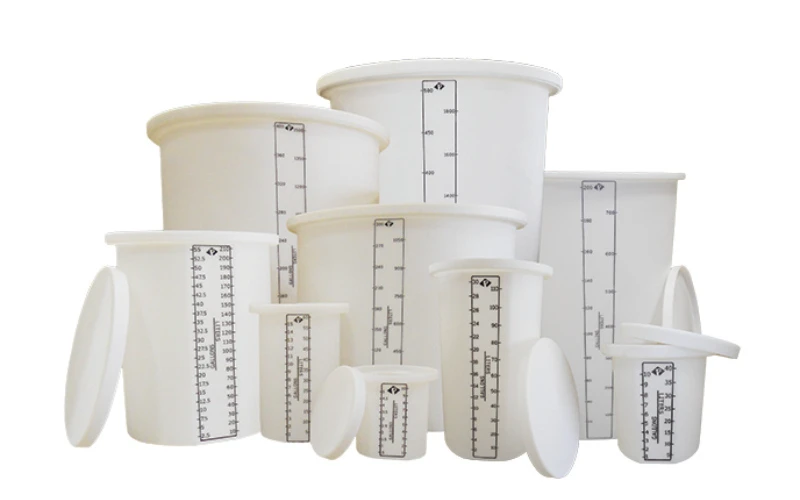
Four things decide whether a tank is right for your
application. Work through them in order, because each one narrows the field
before the next.
These four come up after delivery more often than before it.
Fittings and gaskets are rated separately
The tank resin and the fitting materials are not rated together. A tank
can be compatible with your chemical while the supplied gasket is not.
Confirm gasket and fitting material separately and specify them at the time
of order rather than replacing them later.
Venting has to match your fill rate
A tank filled by pump moves air far faster than one filled by gravity.
Undersized venting can deform a tank during filling or draining. Confirm
vent capacity against the rate you intend to fill at.
Secondary containment may be required
Containment is commonly specified as a percentage above the primary tank
volume, and the requirement varies by chemical, by volume stored, and by
jurisdiction. Confirm what applies to your site before finalizing a tank
size, because containment can change which tank fits the space.
Outdoor installation
Tanks installed outdoors need UV stabilization, and freeze protection
where temperatures drop below the freezing point of the stored liquid. Ask
about both if the tank will not be housed.
What is the difference between a water tank and a chemical
tank?
Construction and rating. A chemical tank is engineered for the density
and chemical exposure of the liquid it holds, and carries a specific
gravity rating a general purpose water tank may not. Some tanks suit
both. Confirm the rating rather than assuming from appearance, since a
chemical tank and a water tank of the same size can look identical.
How do I confirm my chemical is compatible?
Manufacturer resistance charts list compatibility by chemical, by
concentration, and by temperature. Send us the chemical, the
concentration, and the operating temperature and we will confirm against
manufacturer data before you order.
Can I store a chemical in a tank rated for potable water?
Not automatically. A potable rating describes suitability for drinking
water, not chemical resistance or specific gravity capacity. These are
separate ratings and one does not imply the other.
What size tank do I need?
Start from your delivery quantity rather than your usage. A tank
should hold a full delivery with headspace remaining, otherwise you pay
for partial deliveries. Then check footprint and height against your
site, including the clearance needed to fill.
Do you ship chemical tanks nationwide?
Yes. Larger tanks ship by freight and delivery requires an accessible
site. Contact us for a freight quote and to confirm what is needed at
delivery.
Need help selecting?
Send us the chemical, the concentration, the operating temperature, and
the volume you need to store. We will confirm compatibility against
manufacturer data and quote the tanks that fit. Bulk and multi tank orders
are quoted directly.