








Truck Bed Fuel Tank Buying Guide
Choose the Right Tank the First Time
Transfer tank or auxiliary tank, diesel or gasoline, 40 gallons or 90. Here is how to work it out before you buy.
Truck bed fuel tanks solve two very different problems, and picking the wrong type is the most common and most expensive mistake buyers make. This guide walks through the decisions in the order they actually matter: what job the tank does, which fuel you are carrying, what fits your bed, and what to add when you order.
Start Here: What Is the Fuel For?
Everything follows from this one question.
| What you want to do | What you need |
|---|---|
| Drive farther between fill ups | Auxiliary fuel tank |
| Fuel equipment, generators, or machinery | Transfer tank with a pump |
| Both, from one tank | Transfer tank with a pump |
| Carry fuel and keep tools secure | Tank and toolbox combo |
| Carry two different liquids | Split tank, two compartments in one body |
An auxiliary tank feeds your truck's own fuel system. A transfer tank dispenses fuel to something else through a hose and nozzle. They look similar in the bed and they are built differently underneath.
Diesel or Gasoline Changes the Whole Setup
On the auxiliary side, the fuel you carry decides how the system works, because federal rules govern where fuel is drawn from a tank.
- Diesel can be drawn from the bottom, so a diesel auxiliary tank gravity feeds into your factory tank through an install kit. No pump, no wiring, nothing to switch. See how gravity feed fuel tanks work.
- Gasoline must be drawn from the top, so a gasoline auxiliary tank cannot gravity feed. It uses a small inline pump on the frame with a toggle switch in the cab. The tanks come with pickup and return fittings built in, and the pump is bought separately.
Transfer tanks are different again. Ours are built under a U.S. DOT Special Permit and are legal for gasoline, diesel, kerosene, methanol, and aviation fuel, and they dispense with a pump regardless of fuel. See transfer tanks with pumps.
Shape and Bed Space
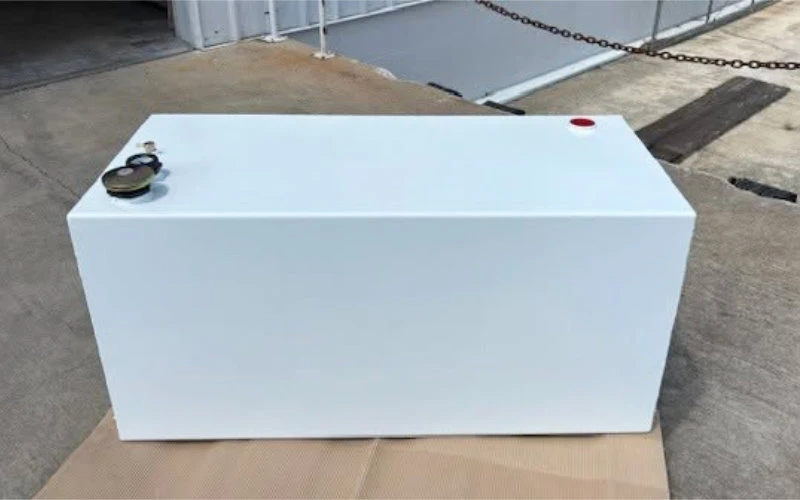
- Rectangle. The workhorse. Low profile versions fit under toolboxes and tonneau covers. Rectangles are also the only shape that takes an accurate fuel gauge.
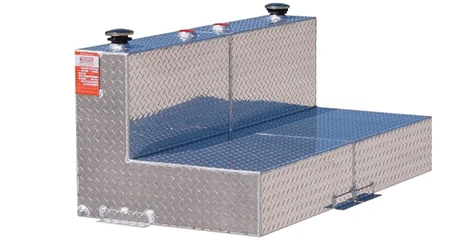
- L-shape. Wraps over the wheel wells, so you get more gallons without using more floor space.
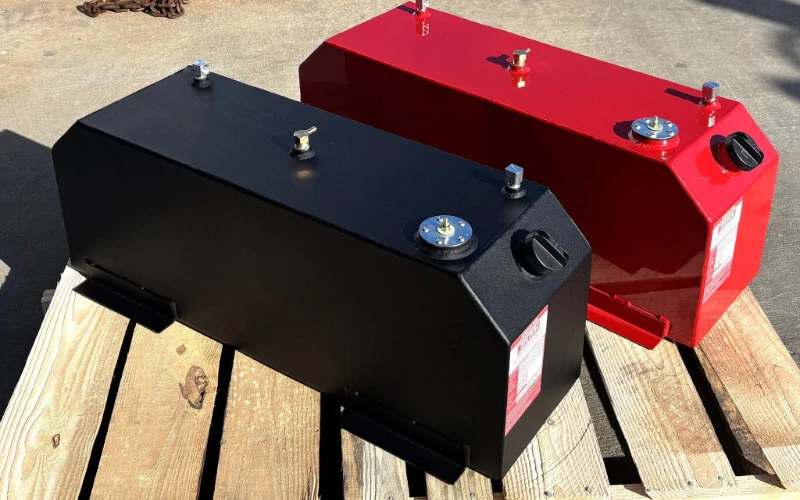
- Wedge. Angled body that sits against the bulkhead and leaves the rest of the bed usable.
- Split. Two separate compartments welded into one body, each with its own fill point, for carrying two liquids at once.
- Double wall. A tank inside a tank, for sites that require secondary containment.
- Toolbox combo. Tank and lockable box in a single unit.
Sizing Without Overloading the Truck
Capacity runs from about 30 gallons up to 110. Bigger is not automatically better, because fuel is heavy. Diesel weighs roughly 7 pounds per gallon, gasoline slightly less. A full 110 gallon tank is about 770 pounds of fuel before you add the tank itself.
Check the payload rating on your door jamb sticker and work backward. For most half ton and three quarter ton trucks carrying other gear, tanks in the 40 to 60 gallon range are the practical sweet spot. Dedicated fuel trucks and one ton chassis can carry the larger sizes comfortably.
Knowing How Much Fuel Is Left
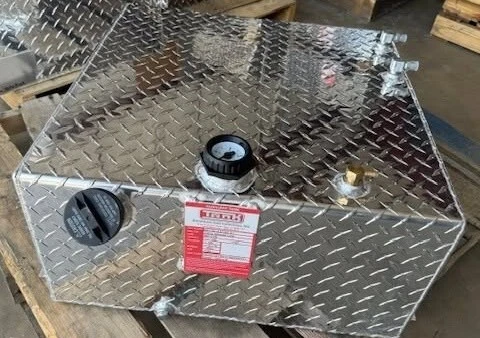
A sender with an in-cab gauge can be added when you order, but only on rectangle tanks. On wedge and L-shape bodies the bottom holds far more fuel than the top, and a float based sender cannot read that shape accurately. Split tanks need one gauge per compartment. Full detail is in our guide to fuel tank sending units and gauges.
A tank mounted mechanical gauge is the other option. Nothing to wire, but you read it at the tank rather than from the driver's seat.
Finish and Durability
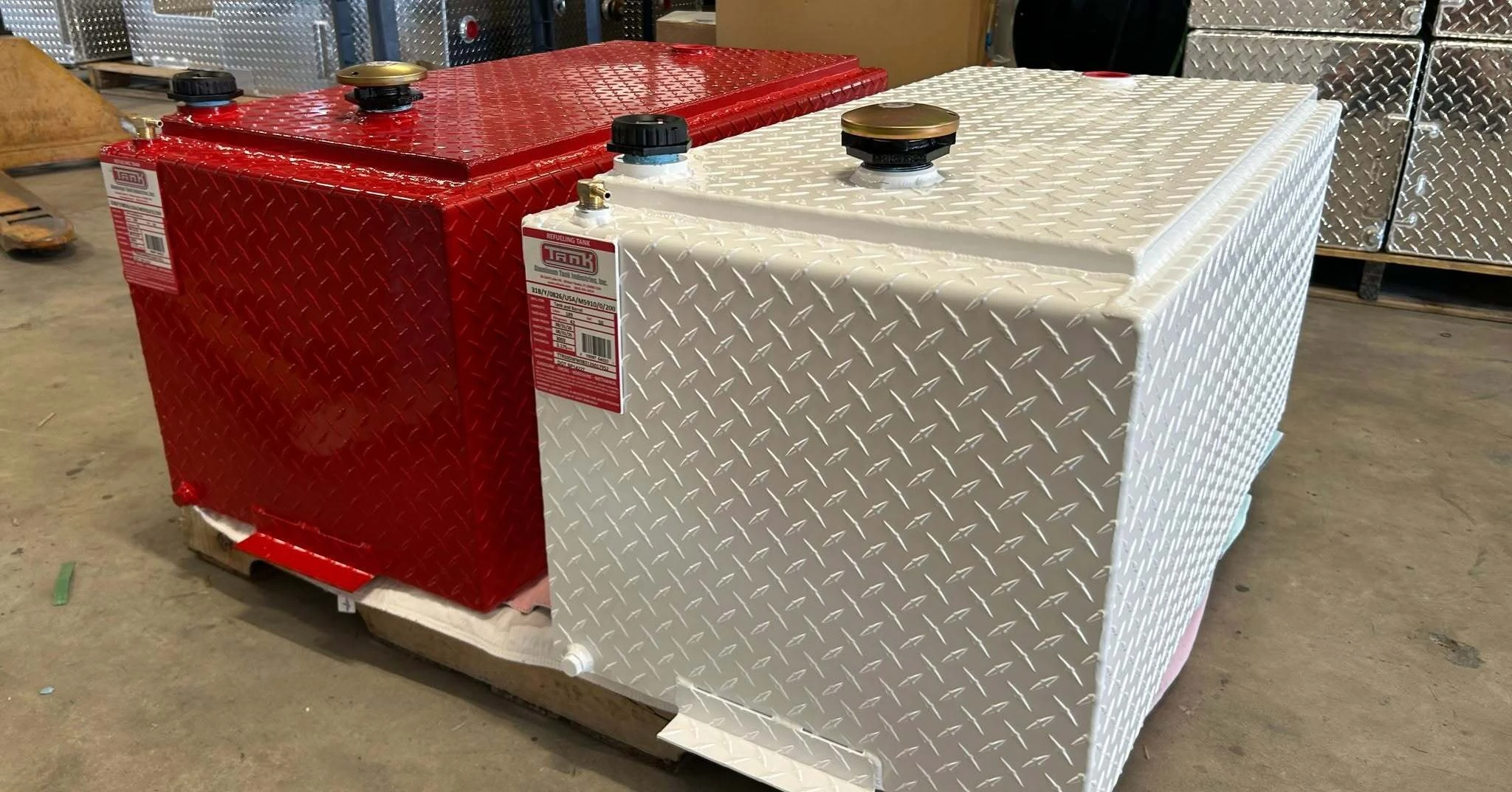
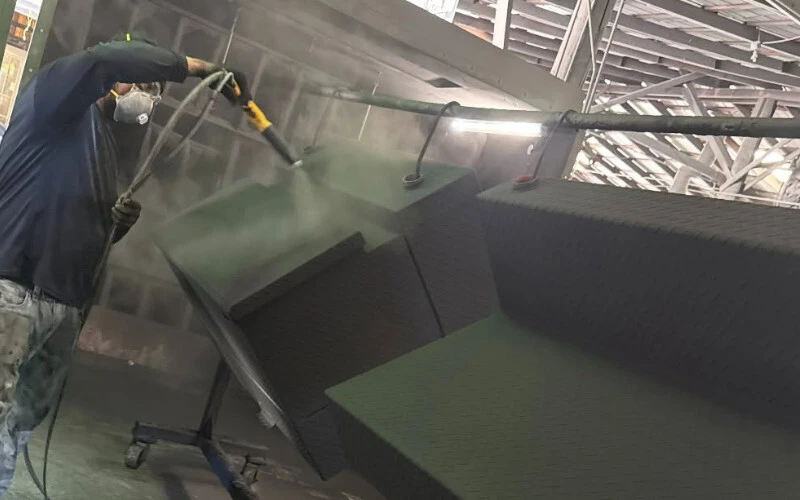
Tanks come in bright diamond plate aluminum or black powder coat. Aluminum will not rust, which is why it is the standard for bed tanks, and the diamond plate finish hides scuffs from equipment and tie downs. Powder coat is applied at the factory before shipping, so it adds about a week to the build.
Black is the standard powder coat color, and other colors are available by request. Custom colors are quoted per order, so call us with the color you need and we will price it with the tank.
For punishing duty cycles, the Severe Series uses 50 percent thicker .190 inch aluminum, fully welded baffles, a lockable SpinSecure vent cap, and carries a 5 year warranty instead of the standard 1 year.
Legal and Compliance Basics
Our transfer tanks are built under a Special Permit issued by the U.S. Department of Transportation, which covers private, commercial, and state use. Auxiliary tanks meet DOT requirements for auxiliary fuel tanks, with HD aluminum construction, internal baffles, and rollover and vent protection.
Ordering and Lead Time
Most tanks ship within 2 to 3 business days. Adding a gauge or powder coat makes it a built to order item and adds about a week. Tanks ship by parcel or freight depending on size, and freight deliveries are scheduled with you.
Common Questions
Are truck bed fuel tanks legal?
Yes, when the tank is built to the right standard for its use. Our transfer tanks carry a DOT Special Permit and our auxiliary tanks meet DOT requirements for auxiliary fuel tanks. Local and state rules still apply to how you use them.
Can I haul gasoline in a transfer tank?
Yes. Our aluminum transfer tanks are approved for gasoline along with diesel, kerosene, methanol, and aviation fuel.
Will an auxiliary tank void my truck warranty?
The diesel install kit connects through the factory fill neck without modifying the fuel system, so it does not void the truck's warranty.
Why aluminum instead of steel?
Aluminum is lighter, which matters when you are already adding hundreds of pounds of fuel, and it does not rust. Diamond plate adds stiffness and hides wear.
Can I take the tank out when I do not need it?
Yes. Tanks bolt down with the included hold down brackets and come out the same way. Plan for the weight of an empty tank, which runs from about 50 pounds on the small rectangles to well over 100 on the large ones.
What size do most people buy?
For range extension on a daily driver, 40 to 60 gallons. For job site fueling, 90 to 110 gallons with a pump. For light duty or shared bed space, 30 to 42 gallons under a toolbox.
Where to Go Next
In-Bed Auxiliary Fuel Tanks
Extending your truck's range, diesel and gasoline setups compared.
Gravity Feed Fuel Tanks
How the diesel install kit works and which kit fits your truck.
Transfer Tanks With Pumps
Fueling equipment from the bed: pumps, nozzles, meters, filters.
Sending Units and Gauges
Reading fuel level, and why gauges only work on rectangle tanks.
Still Deciding?
Browse all fuel transfer tanks, or call us and we will match a tank to your truck and your job. (863) 261-8388